


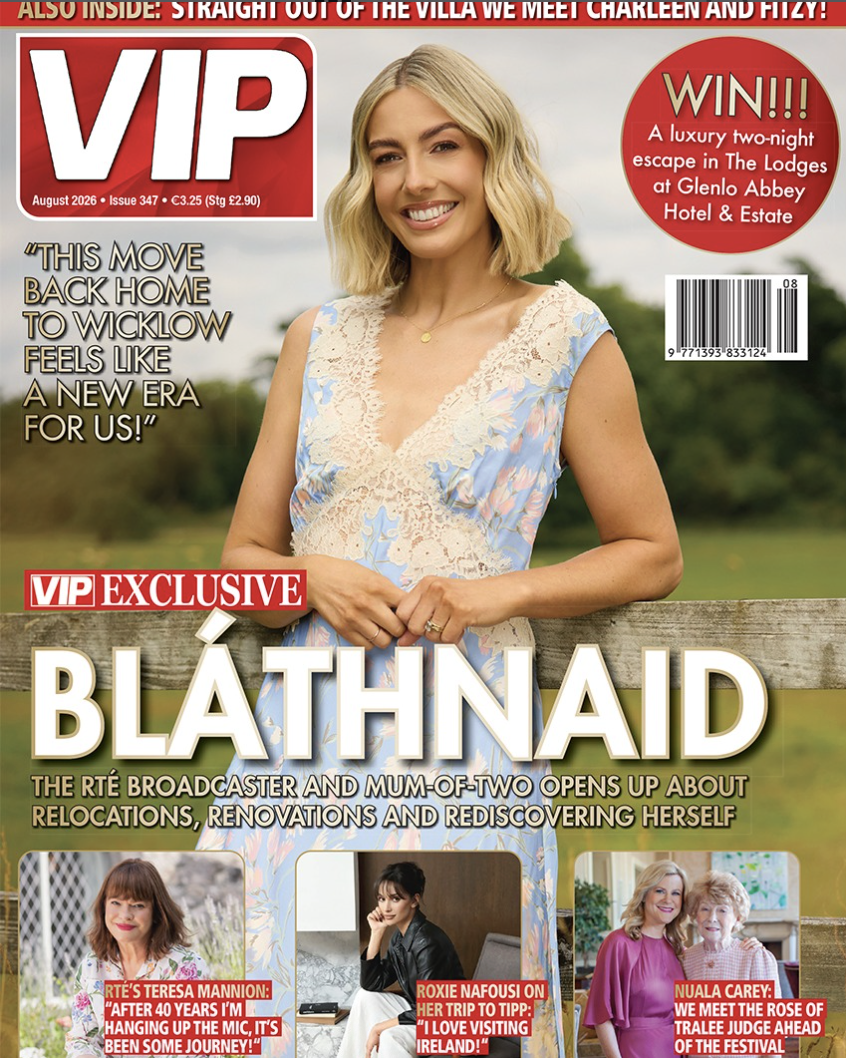
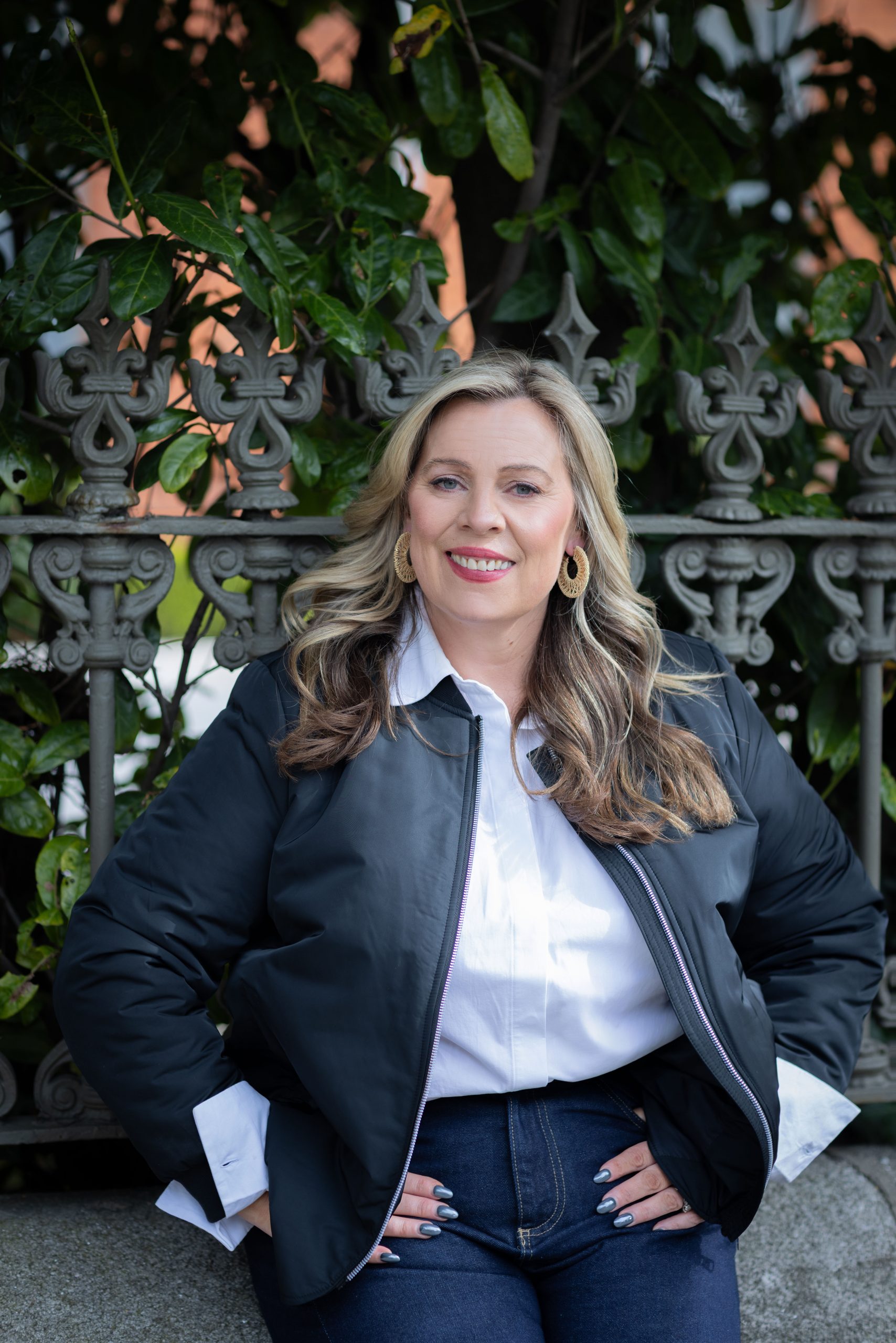
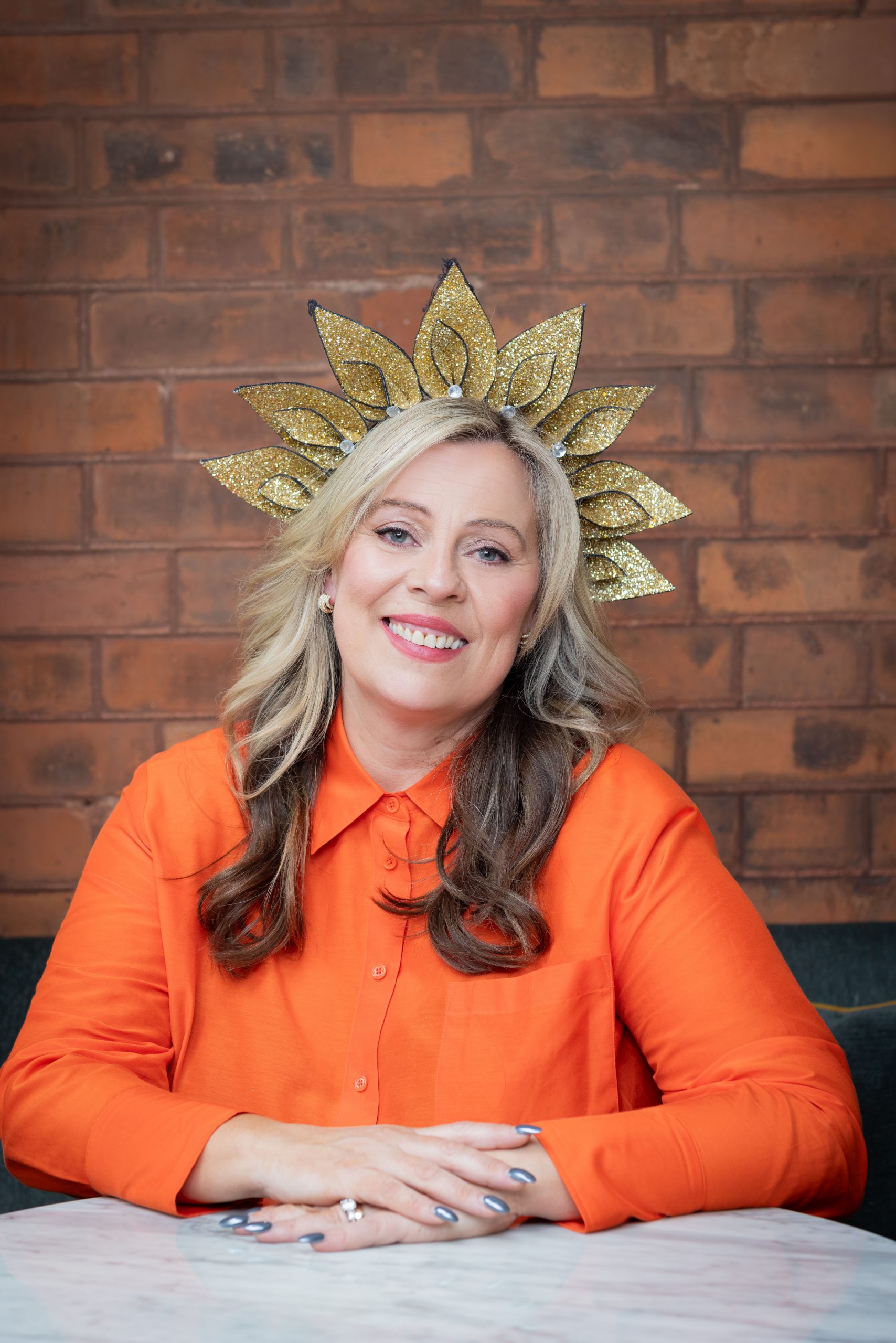
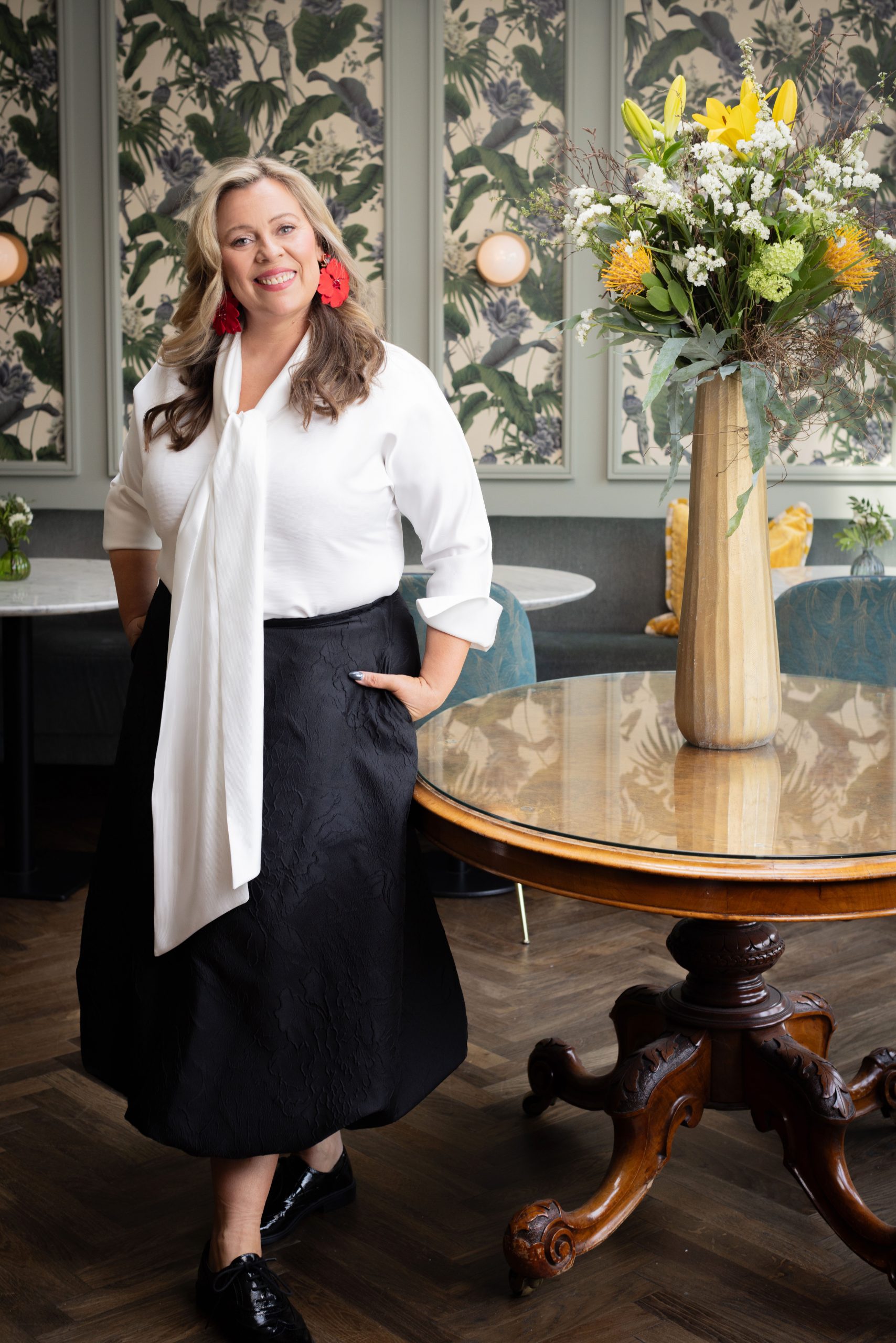
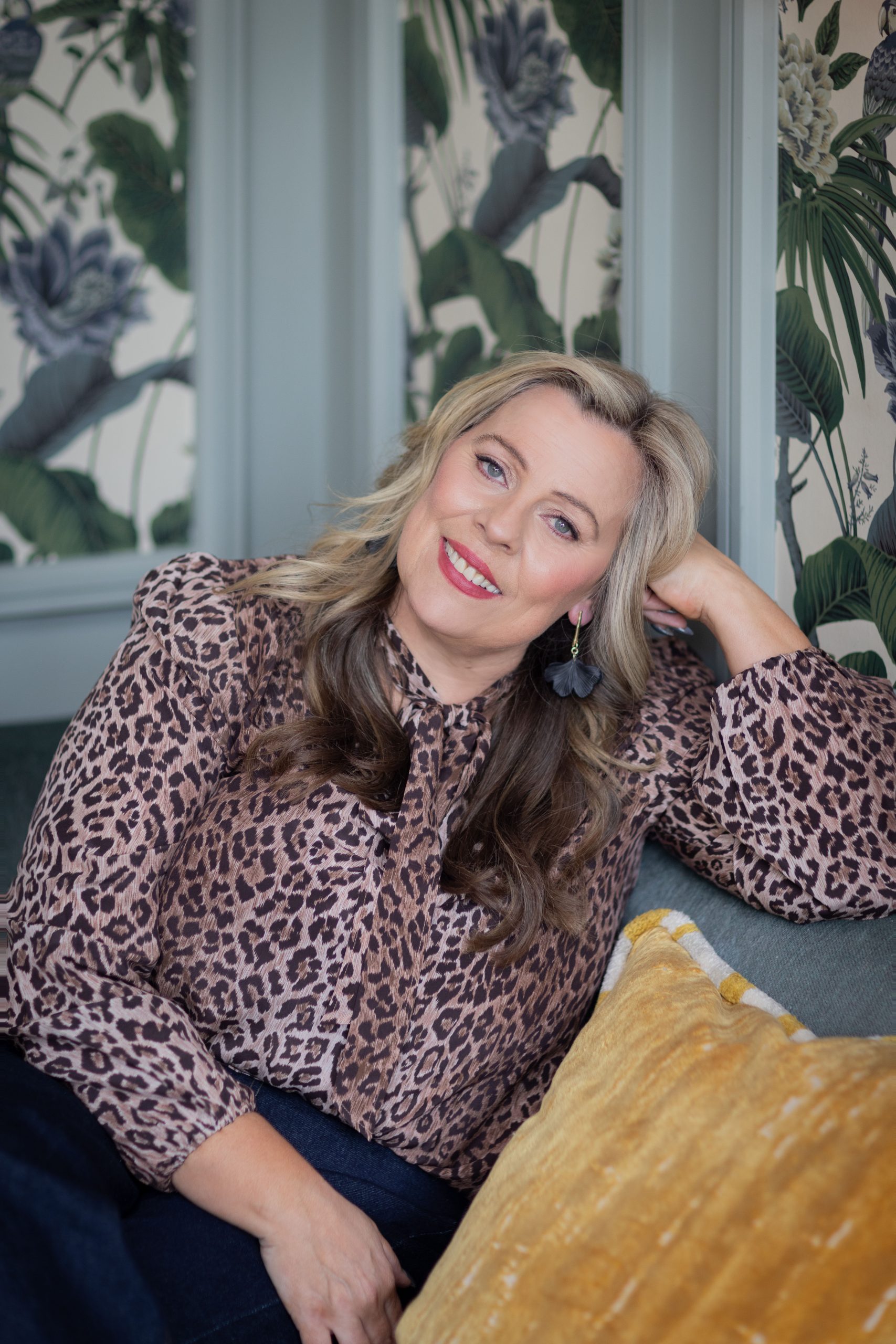
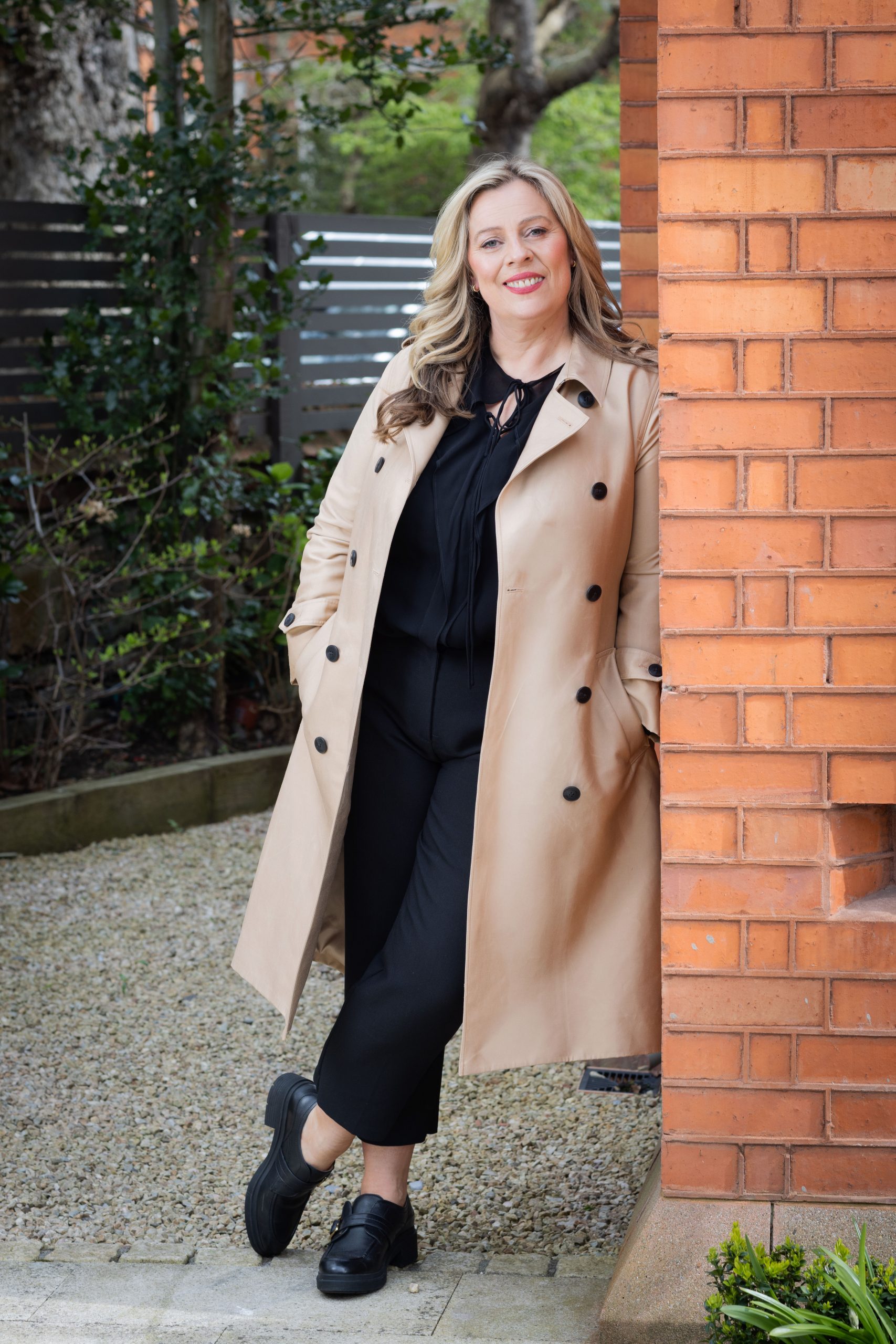
There’s something disarming about Katriona O’Sullivan’s honesty. The number one bestselling author, you see, says it as it is. In the days running up to this photoshoot – which took place at the boujie The Wilder Townhouse, in Dublin 2 – she had been texting back and forth with our wonderful stylist, Rosalind Lipsett, admitting she felt vulnerable about being styled. And honestly? We get it. Handing over control to someone you’ve never met, knowing the results will end up in a national magazine, is a lot. Nerve-wracking, most of us would agree.
We mention all this for a reason, because it neatly ties in with the subject matter of her brilliant new book (which we loved as much as her whopping bestseller Poor, which, after two years of release, is still in the top ten, justifiably). Hungry is her powerful new memoir – told with stunning courage and vulnerability – and is both a personal reckoning and a powerful reclaiming of body, voice, and self. It explores her lifelong search for self-acceptance and interrogates how trauma, class, and gender shape the way women see themselves – and how society teaches them to measure their value. Despite her successes and achievements, Katriona still struggles with her “value”, but most of us do, don’t we? Which is again what this book is about, not shrinking to survive anymore, about claiming our space as women, about stepping into our light.
For being brave enough to write so vulnerably again, we thank her, and for this, her new piece of much-needed social commentary, we salute her too. The Guardian calls her one of the most remarkable people you will ever meet, and we’d have to agree, she is.
From an upbringing marked by addiction, poverty, teenage pregnancy, and homelessness, she is today happily married with three wonderful children, is a professor in the Department of Psychology at Maynooth University, and is Director of the National Centre for Inclusive Higher Education. She’s also a load of craic and dead sound too. We talk about the new book, about courage, vulnerability, how hurt and healing can happen at the same time and why being truly heard is one of the greatest gifts of all.
Katriona, we are in awe of you and all your achievements and successes, it’s a real honour to have you in VIP. Thank you for agreeing to do it. Why did you agree to do us, actually?
Because VIP is iconic! Who doesn’t want to be in VIP?! All the luxury, all the wonderful people in Ireland have been in VIP! So, it’s an honour for me really.
The honour is all ours! You sold out The National Concert Hall for the launch of your new book, Hungry. We’re not surprised a bit, but are you?
Totally! When Eason suggested The National Concert Hall, I think it was Sally Rooney who was the last person who did this type of event and I was like, really, do you think? But I have to trust the people who are arranging these events and just go along with it because I do get a bit embarrassed about the thought of asking people to come and see me, but the support since my book came out in 2023 has been phenomenal. I’m so grateful for it.
To think that your book Poor is still in the top ten after two years is startling, isn’t it?
It is, yeah. But I think it just goes to show that we’re often afraid to be honest, we’re often afraid to share things, and I think people want to hear the truth sometimes. Me just being brave enough to kind of say this is me, this is what happened to me, this is how I got here, I think it resonates and I think people want to share. But we’re just so repressed in some ways, or we’re so ashamed, and I think people just see someone who’s not ashamed and they kind of like that. It’s just been lovely, and I think what’s really nice is that people connect with different parts of my story so it’s not all the same person you know, there’s men who message me and they’ll talk about addiction or their kids, or there’s women who will talk about abortion, or you know their shame or relationship, so it’s really nice.
To be so honest takes great courage, do you think it requires that or is it something different?
I don’t know because I don’t feel that courageous. I’ve always been very outgoing as a person; my nickname as a child was Mouth! I can’t be any different than this, and I think when you have the privileges that I have, you have a responsibility to try to make things a bit better for other people. You might look at my life and think she’s not had a lot of privileges, but I have a university qualification; I own my house; I have a safe job; I have a loving family. I’ve achieved happiness and security, and I feel like when you have that, you have, maybe, a responsibility to look at the world and go how can we make sure other people are getting that too. So I don’t think it’s necessarily courage, I think I just feel a sense of responsibility to help others. If more of us were a bit braver, a bit more honest, and a bit more helpful, then maybe we wouldn’t have loads of girls like me still struggling the way they are.
You say it’s such a gift to be heard.
That is one of the resonant things about my childhood, that nobody noticed what was happening, and nobody heard me. And so it feels lovely to be heard. But I don’t think that’s a reason to tell your story, because I think that could hurt you, actually, because of the vulnerability. There’s a big vulnerability that comes with being so open, and sometimes I’m really conscious of that, that some people know things about me that I’m not okay with, still, so that’s a space you have to be able to navigate safely. How I do that? I have a great marriage, I have great friends – you’ve met my friend Sarah here today – I have a great therapist who’s my friend now too. When I have a vulnerable day, like I did recording the audio book the other day, and I was feeling overwhelmed and afraid and sad, I had Dave, my husband, I had my friend Sarah who I went for a little jacuzzi with, and then it passes, and I think that’s what this story is about in one way. It’s about learning how to manage the hard and difficult feelings we have as women when we’ve been vulnerable.
Well, we took you out of your comfort zone today and glammed you up and styled you, we hope it didn’t make you feel too vulnerable.
You didn’t put me in that position. But it’s true, I do like being in control of my own body. I think as women we do view ourselves with such a harsh eye, deleting and filtering images, then retaking them. While today did make me feel vulnerable, it was also so supportive, the way you showed me photographs of myself as we were shooting, and telling me how beautiful I looked. Because that’s a lot of what the second book is about, about shrinking to survive. But I’m not shrinking myself anymore. And I really feel like we need to do better for women in terms of that message about shrinking and being smaller, not just physically, but emotionally, sexually and psychologically too. That’s what the story is about.
Was this book as hard to write as your first?
Yeah, it really was. But you know, there are two sides to me. So when I write, there’s a side of me that’s like, my God, this is heavy. But then there’s a kind of intellectual element to writing for me, which is, how am I going to make sure that you as the reader feel? I want you to feel me in the journey of the book and really empathise with the story and learn from it as well. So there’s a real vulnerability and a sadness sometimes, or a happiness when I’m writing the stories of my life. But then there’s another part of me that’s like, oh, how can I make these words better? And how can I make that more descriptive? But parts of it yeah are really painful. I didn’t write about some of the experiences that I had in terms of abuse. I didn’t write about everything in Poor because I didn’t want the reader to turn away from the book if I wrote about everything. But there are more graphic and maybe gruesome details about what I went through as a child and as a woman. That was hard to write.
If it was hard to write, it must have been harder still to read both books for audio?
I’ve been through a lot in my life, so to have that all laid out and have to read it in three days, that’s difficult. My voice breaks a few times in Poor and I think it breaks a few times in Hungry too. Having said all that, I actually enjoyed reading it as well, I mean you spent the morning with me, I’m extremely dramatic! I did theatre studies years ago! There’s a side of me that’s really into trying to make it come alive, so I love that part of it also!
We’re curious about your writing process. Tell us a little about it.
I’m a really fast writer. I can write 5,000 words in a day when I’m on it! Now they could be shit words, but you’re getting them down at least! I also like to get affirmations as I go (her friend nods), so I send snippets to my friend or my editor because I need feedback.
You’ve a very distinctive writing voice…
It’s me.
It is, it’s you. Can you remember when you found that voice?
I was always writing, even as a kid, and I read a lot too. I’ve a really good editor also so she would be guiding me a lot. But I like words, I like the idea of making someone feel with my words, so I really try to push myself to make it sound beautiful. I don’t know if it is beautiful, but people tell me it is.
Are you reading anything good at the moment?
I’ve just finished Liz Nugent’s The Truth About Ruby Cooper, which was amazing. I’ve also just read Caitriona Lally’s book Home Economics, so good, it’s her memoir, it’s phenomenal. I wouldn’t usually read a lot of memoirs, and I don’t like poverty porn, and I’d hate people to think that my book is that, I think mine is more social commentary rather than that kind of thing, but I love women’s stories. I love Elaine Feeney, I just read Louise Kennedy’s new book Stations, and when you’re a writer, it’s great you get the books before they come out, such a perk of the job!
You mentioned you love women’s stories, so do we! We love women – we would need to being a women’s magazine(!) – but there’s something about women when they get to midlife that we love even more so.
As I age, I like to think it does get a bit easier, or maybe it’s just that you know yourself a bit better? I’m 49 now, and it’s at this age that you kind of go, it’s shit, isn’t it? [laughs]
And to get through it, you need an army of women around you!
On my social media, I have an army of women who are just so amazing. People say social media is a bad thing, I have a beautiful following, a beautiful group of people who are so affirming. I affirm them, women message me, I message them back, have chats with strangers, share personal information…
And you have a lot of followers on Instagram.
I don’t know if it’s a lot, 65,000, but I’m not an influencer. I would push back on that. I want to influence policy, I do want to make the world fairer, and I am an academic and I do care about equality, I really care about women. I really care about poverty and about making things fairer, that’s the point of my stories, and the point of what I do on social media. Because we are the game-changers. Because if you empower women to be safe, to look after our families, to get educated, to get employment, the whole family changes.
Poor is back at The Gate for another sold-out run; it is the hottest ticket in town. On March 25th, 23,000 students watched a livestream of it from the stage to their schools. That must have been quite the moment.
And that started with a conversation between me, Roisin McBrinn and Colm O’Callaghan in The Gate. One of the most amazing parts in my journey is that they restored my faith in middle-class people…
Really?
But I’ve been hurt by them. It doesn’t come from nowhere. And I do think that people who have privilege don’t use it enough to make things fairer, and that frustrates me. And I’ve just had this experience with this organisation that’s like this really privileged theatre that has not only embraced my story, but they’ve actually adapted the way they do things and who they hire. They’re considering things and conversations that I don’t think they would have previously. It’s just been a joy, and then when I said, “Wouldn’t it be great to get this into every school in Ireland?”, and they were like, yeah, but it would be really hard. I then said, “what about a live stream?” And the next thing they make it happen, they get these amazing cameras in and on March 25th, 23,000 students across the country watched it. I was driving back from a talk, and I had to pull into the hard shoulder to have a little cry, and I’m gonna cry again…every time I think about all the kids, and all the girls like me…I would have loved to know when I was young that what was happening to me was happening to other people too. And then hundreds of teachers have emailed me and said that it really has been transformative for young people. And it’s about the arts as well, it’s not just about my story, it’s about them seeing The Gate, and seeing the stage, and it being accessible and poor stories being on the stage.
You never could have imagined that this girl would have wound up here, could you? You never saw this future for yourself, did you?
Never, no, I believed what was taught to me. I remember a teacher saying, “Katriona, we just want to get you to the end of the GCSEs”, while the girl who sat next to me was a good girl, she said to her, “Oh, you might go to university if you keep going the way you’re going”. A lot of the world put limits on me, and my experiences did as well, and my low self-esteem and the abuse I suffered and the way I felt about my body, all that limited what I thought I could be and do. And through recovery, therapy, through establishing a lovely support network, my marriage, through all that I’ve achieved a life that I couldn’t have dreamt. A professor in the university, a great husband and three kids that are amazing – wow – that doesn’t happen to girls like me.
But yet it did. You made it happen. Let’s talk about the day job…
Which one?!
You’re currently a Professor in the Department of Psychology at Maynooth University and Director of The Centre for Inclusive Higher Education, yes?
That’s the day job, but I also do public speaking as well. So this year I decided to reduce my time in Maynooth because there’s no point in writing a book about being hungry and the pathological drive to achieve if I continually just keep going and don’t stop. So in January I went to the University and I said, look I’m getting so many opportunities, my new book is coming out, could you support me to reduce my time, and they were like, absolutely, so I’m on 30 per cent time now in Maynooth, which is fantastic, I still run the centre, I have four PhD students who I supervise, I oversee a national initiative that’s for girls who are disadvantaged and the rest of the time I’m writing and speaking and doing stuff in The Gate and enjoying this other part of my life. I think it’s really important to actually show women that we can’t do it all. People say to me how are you doing it all, and I’m like, I don’t post when I’m in my trackies lying on the couch binge watching Bridgerton, like I’m not posting that, or when I’m really tired and I can’t move. So, my message is always, don’t measure your life against a curated version of someone else’s life on Linkedin and social media.
Is there much time for lying on the couch watching Bridgerton?
There is, yeah, maybe not at the moment because the show’s been on and I’ve been in there a lot because I’ve been selling merch, but that’s amazing! Last night I met actor Ciaran Hinds, he came in to the show, had a drink with him, amazing. A few weeks ago I met Mary
Robinson!
This journey has brought great opportunity to meet incredible people…
It has, yeah, but I’m not really that awed by people. I’ve got to be honest and say I love to meet a girl from Summerhill or Ballymum who’s forging a life for herself, that makes me feel moved. If someone tells me my book moved them, that moves me. I got a message last week, a girl sent me an acceptance letter for a psychology degree, and that’s special. Now, Mary Robinson has been my hero for years, so when I met her it was like [squeals]. She had come to see Poor on the last run, but at the time I was in Paris launching my book so she Facetimed me while I was in France, and that was A.M.A.Z.I.N.G, but I never got to meet her until a couple of weeks ago and we went to see the play Prima Facie together, that was a dream come true. But I’ve met four Presidents – me, me involved in delinquency – four Presidents! There’s a part of me that’s always grateful and always aware of how far I’ve come.
There’s another Mary in the new book, Hungry, that also meant the world to you.
Yeah, Mary, my therapist! I was so lucky, you know, that in Ireland in 1999, when I actually went and asked for help, I was met with so much care, like, I was introduced to therapy immediately, and without that, I definitely wouldn’t be here, and it’s one of the things that we don’t have on offer now. If you ask for help today, you’d have to wait at least six months or longer for a therapy session, even in the place where I went. And that’s really sad.
Would you ever consider going into politics? God knows we could use a sound head like yours in there!
Putting myself in the limelight in political life, the amount of abuse that women get, I just don’t want that in my life. I’ve seen it with Holly, the head of Social Democrats, like all the women, they don’t even get just criticised for their political views, they get criticised for what they look like, what they sound like, it’s horrific, and I’m just like, why? Why would I do that, I mean I have a voice now, people are listening, I’m involved in policy, I’m on the DEIS Advisory Group with the government, I’ve shaped policy and I’m really proud that I am involved, but I just don’t know if I have the capability and strength psychologically to take public abuse. And anyway, as I was saying to you earlier, I’d want to lead! I’d be like, ‘Taoiseach or nothing’!
Where does this fight come from? Does it come from having survived?
I think it comes from my mam, my mam was a fighter. Also my skills were forged in the fire of poverty and trauma and adversity, and not everybody makes it out, most people are broken by it, but I’m lucky that I have been able to talk about it in this book, and I’ve been able to harness it to drive forward. And my mam was a fighter, she just unfortunately was beaten, but also she applied her fight to the wrong things. I say it in the play, you know people think that I was given my abilities from my dad, but my mam taught me how to say f*** you like no one else could, and that has really helped me. It’s got me into a lot of trouble as well, but it’s actually been a really helpful thing to witness a woman who was really bad in some ways but also really strong in other ways. I kind of learned from her, and I think it’s just in my character as well, like all of my siblings, we’re all pretty outgoing, I think it’s down to personality too.
We love the way you say that hurt and hope can happen at the same time.
Yeah, I can feel sad and happy in the same moment. I actually think feeling hurt is sometimes helpful. A lot of our lives are spent running away from our feelings, running away from the difficult feelings. I had this really profound experience. I was having a difficult situation with a friend, I was driving to work, and I was like, how am I gonna fix it, how am I gonna fix it? Because I felt really sad. And I just got this profound feeling, and I was like, I can actually feel hard feelings. You don’t always have to feel good. I think we’re complex as human beings, and sometimes I think when I’m in hurt it’s the most hopeful time, because I’m moving forward rather
than trying to run away from it.
We’re going to leave you off now Katriona, but thank you for everything, for your honesty, for sharing, for your vulnerability, for today.
Oh, I’m so happy, it’s been a lovely day VIP.